AI transcription tuned for Japanese
Speech is transcribed into a clean, punctuated Japanese transcript first, because everything the translation gets right depends on getting this step right.


Translate Japanese audio to English text online free. UniScribe transcribes your Japanese audio, then translates it into English text you can export.
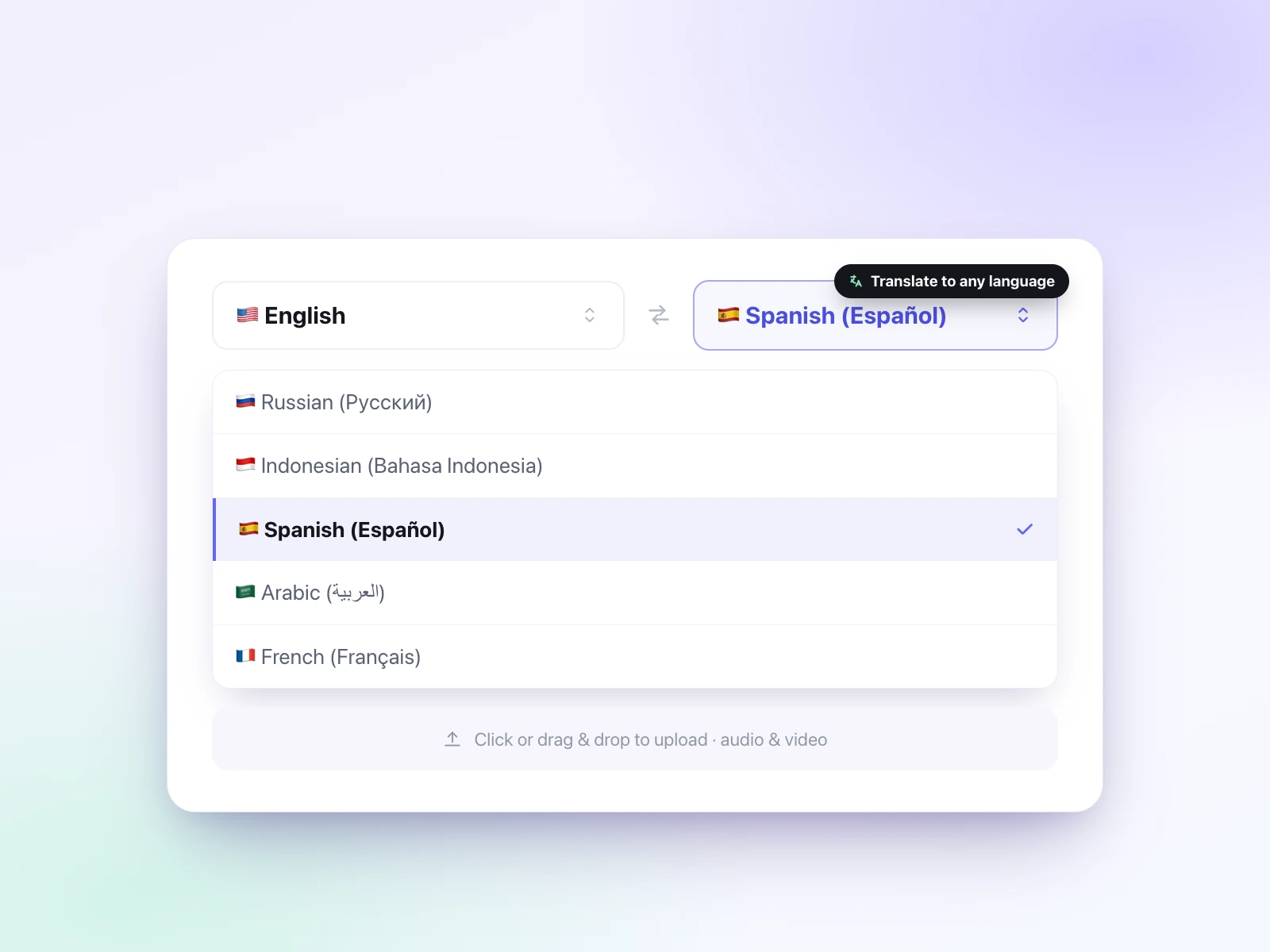
The Japanese source and English target are already selected, so just drop in the Japanese audio you want to translate to English text.
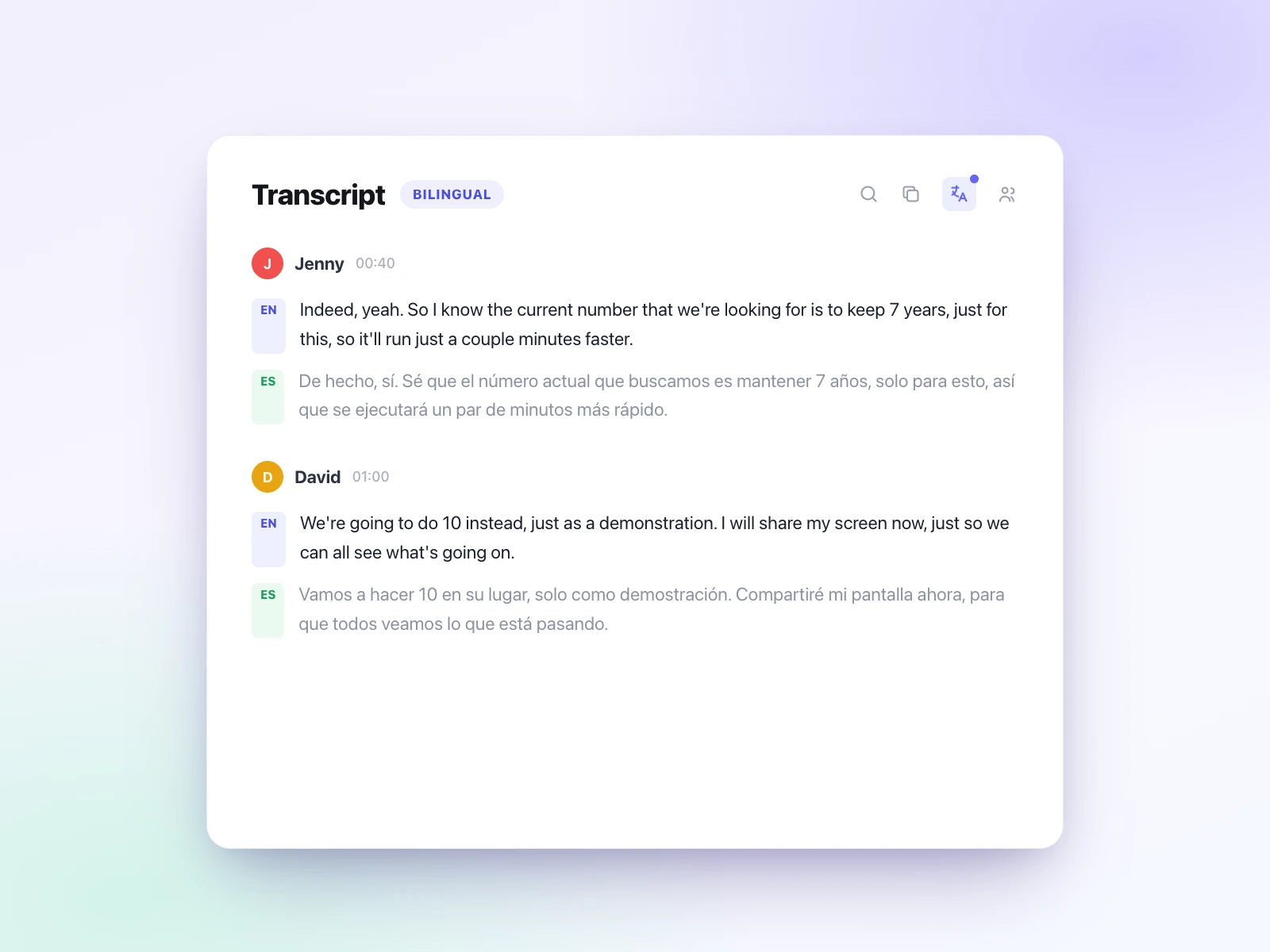
UniScribe transcribes the spoken Japanese into an accurate transcript, then translates that transcript into English text.
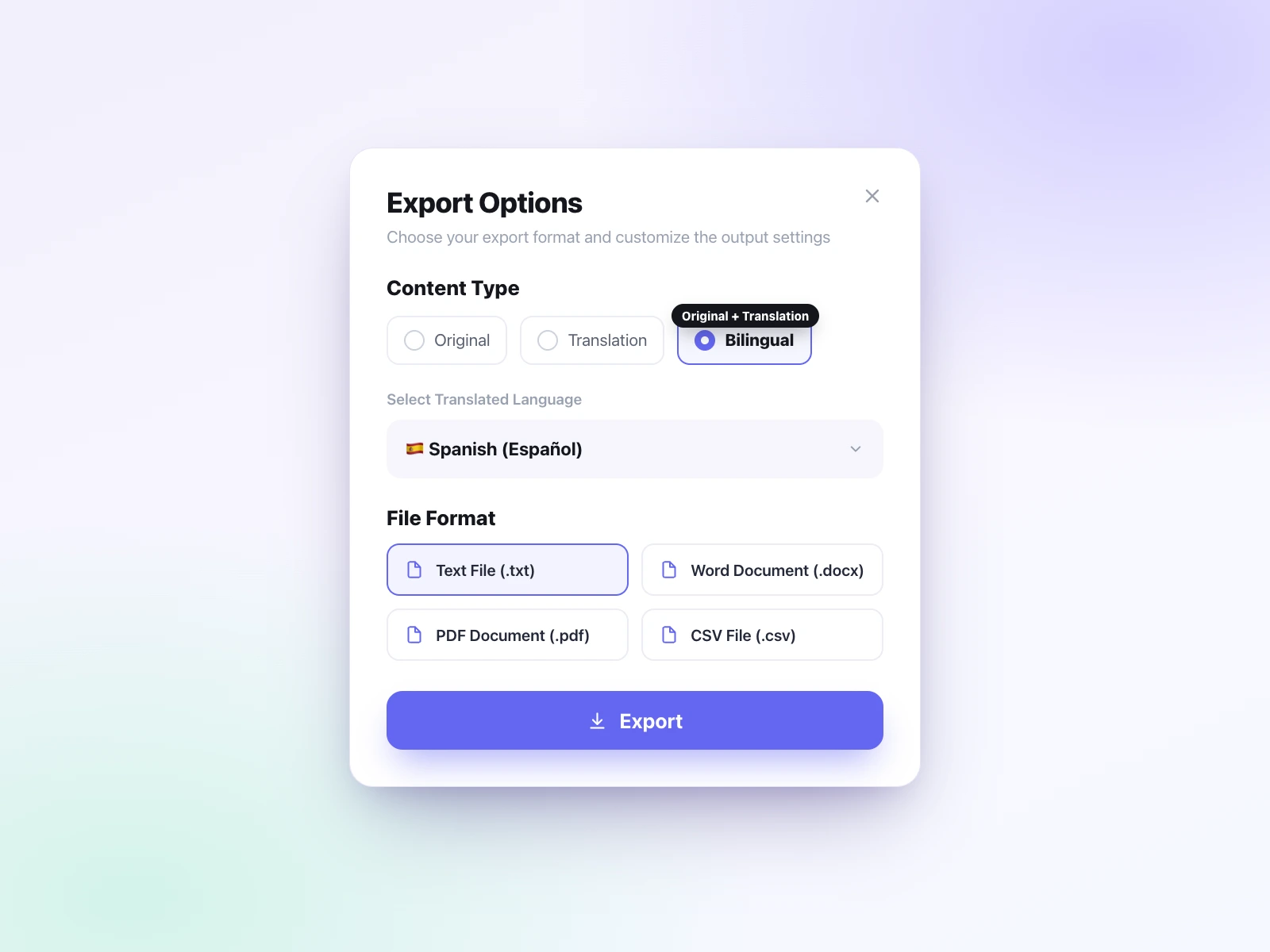
Edit the English text, then export it as TXT, DOCX, PDF, SRT, VTT, or CSV.
Japanese writes without spaces and leaves out whatever the context already makes obvious, which is exactly what makes it hard to turn into English by hand. That is why UniScribe splits translating Japanese audio to English into two steps: it transcribes your Japanese audio into an accurate transcript first, then translates that transcript into English text you can edit, export, and share. Translate Japanese audio to English text in minutes, free to start.
Source language
Target language
Japanese-to-English translation has to rebuild the sentence, not just swap words. Four differences shape every result.
Japanese is written without spaces, so the speech has to be segmented into words before anything can be translated.
Whatever the context makes obvious is left out, so the same verb can mean different things depending on the conversation.
Word order is subject-object-verb, so sentences have to be restructured rather than translated in sequence.
Honorific speech encodes social relationships in verb forms that English expresses through wording and tone instead.
See it in action
Japanese
先週の会議で決まった件ですが、来週までに資料を準備していただけますか。
English
Regarding what we decided in last week's meeting, could you prepare the materials by next week?
This example highlights:Subjects are omitted · Verb comes last · Keigo has no equivalent
Those differences are why a single word-for-word pass falls short. UniScribe is built to translate audio accurately: it translates Japanese audio to English in two AI steps, transcribing the Japanese audio first, then translating that full transcript into English with the surrounding context intact.
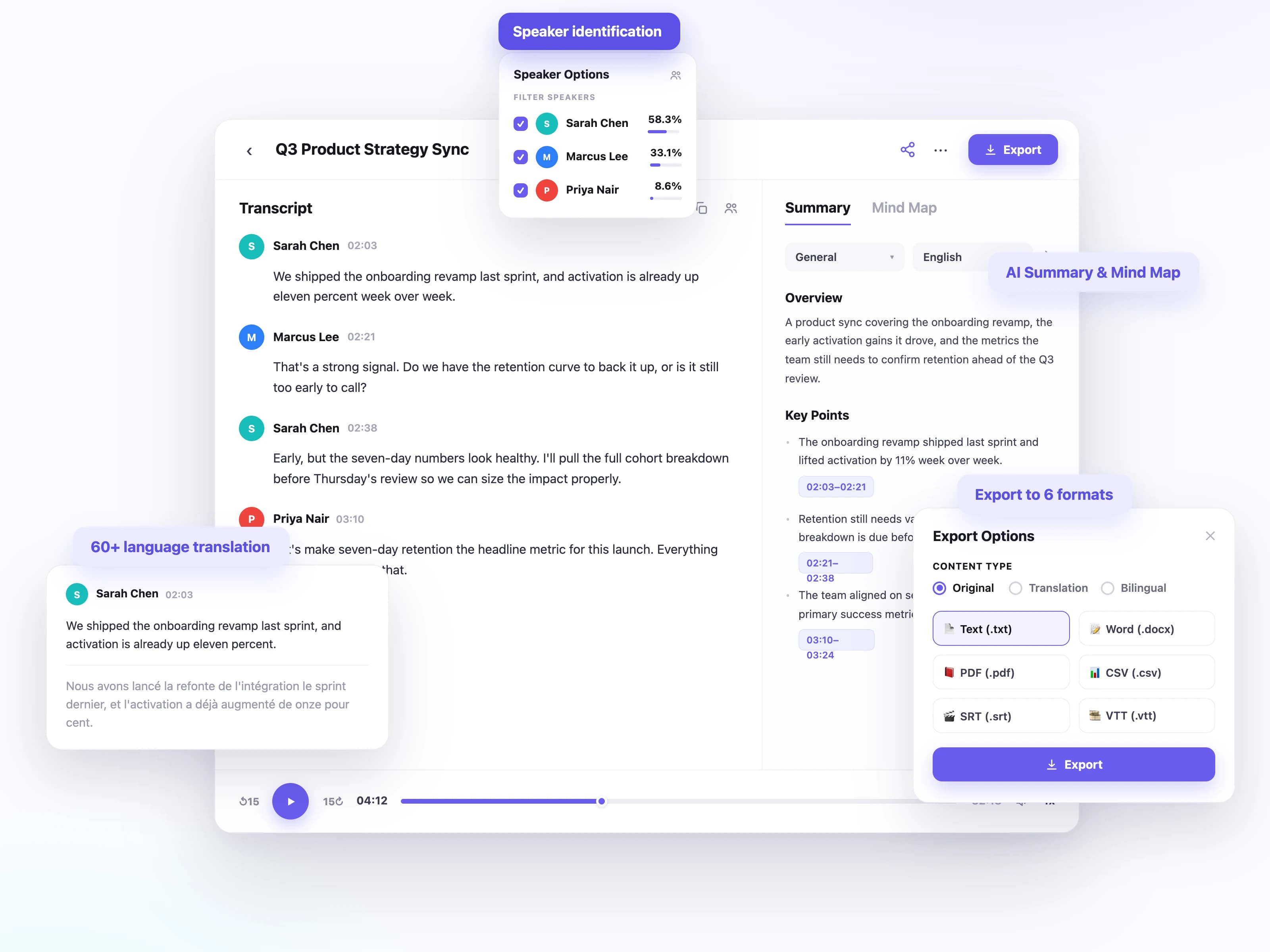
Speech is transcribed into a clean, punctuated Japanese transcript first, because everything the translation gets right depends on getting this step right.
The whole transcript is translated with its context, so English tense, subjects, and word order come out as real sentences rather than a literal gloss.
Transcribe in 60+ languages and translate between them, so the same workflow covers whatever recording lands on your desk next.
Meetings and interviews stay readable. Each speaker is labelled, so the English transcript still shows who said what.
Download the English text as TXT, DOCX, PDF, SRT, VTT, or CSV, whether you need a document, subtitles, or a shareable link.
Turn a long recording into key points, action items, and mind maps so you can act on it without reading every line.
Audio recordings are rarely studio-clean: they are meetings, calls, and voice notes. UniScribe is built for Japanese as it is actually spoken.
Multi-voice recordings like meetings and interviews keep who said what, and the labels carry into the English text.
From conference-room recordings to phone calls and podcast episodes, long recordings stay organized and readable.
Upload MP3, WAV, M4A, and more; large files are fine, with no conversion needed.
Each segment is timestamped, so you can check the English text against the original audio in seconds.
Japanese dialogue becomes English text you can build subtitles, scripts, and a localization pass on top of, starting from what was actually said.
Japanese product walkthroughs and design reviews made readable for the engineers who have to implement them.
Keep an English record of what was agreed on a Japanese call, including the parts where the subject was never said out loud.
Japanese lectures and interviews turned into English text you can search, quote, and cite in your own writing.
From short voice notes to long-form recordings, people around the world use UniScribe to turn audio and video into text they can actually work with.
UniScribe has become a part of my daily workflow, and I believe it should be in every content creators' toolbox. It's the best transcription tool I've ever used. The accuracy is amazing. The summary and FAQs that it creates with every transcription was a nice surprise, they allow me to actually create a valuable add-on to every podcast and video summary I upload to my membership site in not time at all. This has been one of my favorite AppSumo purchases. I give it 5 tacos! If you're on the fence about whether or not to purchase a UniScribe subscription, get off the fence and do it. It's a great value.
I’ve been searching for an alternative to subscription-based transcription apps and recorders, unsure if they’d truly boost my productivity as a teacher. UniScribe does exactly what it promises! I’ve recorded various things using the Voice Memo app on my phone, and simply dropping the file into UniScribe gives me a seamless transcription. I can file it, export it, and move on quickly. I’ve even created a shortcut on my iPhone for direct Chrome login, making access even faster. I had a minor login hiccup, but their support team resolved it quickly. The YouTube transcription feature is next-level – perfect for quick content checks as a teacher.
This tool is a key part of my stack. And the recent update where we can generate different summary types from the same transcript has taken the tool to another level! My key reason when I picked up this tool was to make mind maps from the videos. And this tool keeps delivering on that. The processing speed, quality of transcript, multiple sources, and ability to replay audio later—I mean, can it get more valuable than this?
Effortlessly transcribe audio and video, saving you time and helping you focus on what matters